Buying In Gilbert’s Master-Planned Communities: HOAs, Amenities, And A
June 25, 2026
June 25, 2026
If you are thinking about buying in one of Gilbert’s master-planned communities, the monthly or quarterly HOA number is only part of the story. What really matters is how that community is built, what the fees cover, and how those costs fit into your long-term ownership plan. When you understand the rules, amenities, and possible extra assessments up front, you can choose a neighborhood that supports both your lifestyle and your budget. Let’s dive in.
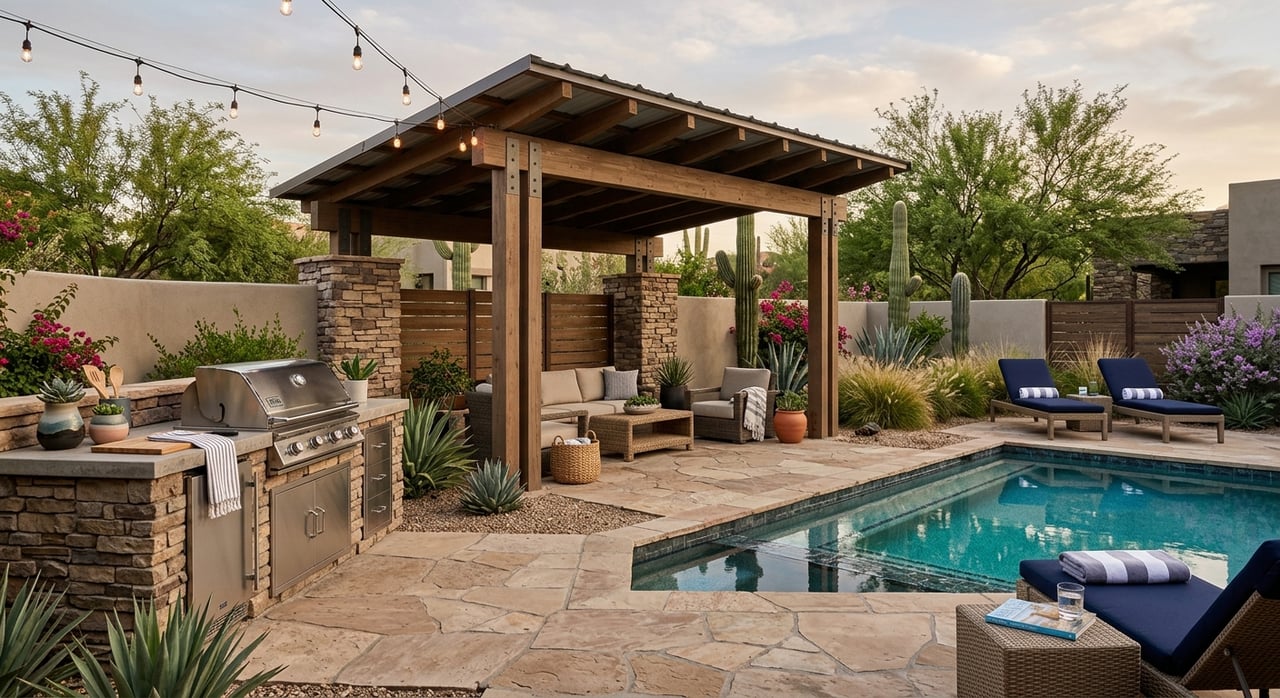
Gilbert stands out because many of its neighborhoods were designed with trails, parks, open space, and connected community areas in mind. The Town’s planning framework includes character areas, a long-range transportation vision, and a Shade and Streetscape Master Plan that focuses on tree canopy and engineered shade.
That matters in everyday life. In a hot desert climate, shade, walking paths, and usable open space can make a real difference in how often you enjoy the neighborhood around you. In Gilbert, the sense of community often comes from both the subdivision itself and the surrounding public spaces.
The Town also says it offers more than 600 acres of open space and maintains a wide range of parks and recreation assets. In some neighborhoods, part of the open-space maintenance is funded through Parkway Improvement Districts, or PKIDs, instead of a traditional HOA structure for those areas.
When you compare Gilbert communities, it helps to ask a better question than “Which one is cheapest?” A more useful question is: What am I paying for, and what could I be expected to pay later?
Some communities have a simple recurring fee. Others have layered costs, special service area charges, capital contributions at closing, or tax-based maintenance through PKIDs. Two neighborhoods may look similar at first glance, but the real ownership cost can be very different.
You also want to separate private amenities from town-level amenities. If Gilbert’s parks, trails, and open spaces already match your routine, you may not need a community with extensive private facilities. On the other hand, if you plan to use pools, lakes, sports courts, or clubhouse spaces regularly, a higher HOA may make sense.
Arizona gives buyers a useful framework for reviewing planned communities before closing. For a new home, the Arizona Department of Real Estate says the subdivision Public Report must be delivered before you sign the purchase contract.
That report covers practical issues like utilities, roads and drainage, common areas, local services, taxes and assessments, and property-owner association details. For a resale home, the association must provide governing documents and a dated disclosure statement after receiving notice of a pending sale.
This is one reason due diligence matters so much in Gilbert. If you are buying in a master-planned community, the documents can tell you far more than the listing ever will.
Buyers often focus on down payment, loan costs, and inspections, but HOA-related charges can also affect your cash needed at closing. Arizona law allows an association to charge up to an aggregate of $400 for resale disclosure, lien estoppel, and related transfer-use services, with limited additional fees for rush or update requests.
That statutory cap is important, but it does not automatically mean every community will be low-cost at closing. Some neighborhoods may also have separate capital contribution or working-capital requirements that are built into the community structure.
Before you move forward, ask for a clear breakdown of every HOA-related cost tied to the purchase. That gives you a more accurate picture of your total cash outlay.
Before you commit to a home in a master-planned community, review the documents that affect both your budget and your day-to-day ownership experience. This is where smart buyers protect themselves.
A practical checklist includes:
If the community has a reserve study, pay close attention to it. Reserve strength can tell you whether the association appears to be planning ahead for major repairs and replacements or whether owners may face more pressure later.
One of the biggest mistakes buyers make is treating HOA dues like a static number. In reality, associations have to maintain landscaping, irrigation, amenities, and shared infrastructure over time.
Arizona law generally says an HOA may not raise a regular assessment by more than 20% over the prior fiscal year without majority approval of members, unless the governing documents set a lower limit. That makes the association’s planning and financial health especially important.
You want to understand whether the board has been funding reserves consistently, whether major projects are coming up, and whether the community has a history of special assessments or large contributions at resale. A lower fee today is not always the better value if future obligations are likely.
Gilbert has a wide range of master-planned communities, and each one shows a different version of what “value” can mean.
Power Ranch is a strong example of a large, amenity-rich community. Its official association information lists amenities that include a barn used for classes and events, basketball and tennis courts, fishing lakes, neighborhood parks, playgrounds, pools, a splash pad, soccer and softball fields, pavilions, trails, and rentable community spaces.
That broad amenity package comes with a layered fee structure. The 2026 budget information shows quarterly assessments of $402 for the master association, with neighborhood-level special service area assessments that can bring the total quarterly dues to $636 or $677.79 in some sections.
Power Ranch also shows why buyers should ask about one-time charges at closing. Its realtor information notes no transfer fee for the master association, but it does list a $382 disclosure fee, a $2,500 master capital contribution at closing, and a $500 Knolls working-capital contribution.
Its 2026 budget narrative also points to reserve planning as a major issue. The association reported increased reserve contributions and noted projects and reserve-study updates tied to irrigation renovations, tree removal, irrigation repairs, and granite installation.
Morrison Ranch is one of Gilbert’s most distinctive master-planned communities from a design perspective. Gilbert’s General Plan describes it as a 1,527-acre mixed-use master-planned community that reflects the town’s historic rural atmosphere, includes reclaimed water, and features tree-lined streets, wide setbacks, trails, sidewalks, parks, schools, and community facilities.
For many buyers, that visual identity is part of the appeal. But design consistency usually comes with stricter review standards.
Morrison Ranch’s design guidelines require landscape plans to be submitted and approved before installation. The guidelines also set standards for front-yard landscaping and place limits on certain exterior choices in visible areas, including rules related to grass, gravel, and artificial turf in front or visible side yards.
Its association says assessments are due quarterly and are $429 per quarter as of July 1, 2025. Morrison Ranch is a good reminder that a community does not need splashy amenities to carry meaningful recurring costs if it supports extensive landscaping and common-area maintenance.
Agritopia offers a different model. Its official site describes it as a planned community built around 11 acres of urban farmland and a farm-to-village concept.
Instead of focusing mainly on pools or sports facilities, Agritopia blends residential living with gathering spaces, dining, and retail. Its directory highlights places such as the Farm, Barnone, the Coffee Shop, Joe’s Farm Grill, and Epicenter.
For buyers, the lesson is simple: amenity value is not always about recreation facilities alone. Sometimes the draw is walkability, mixed-use design, and an integrated lifestyle experience.
Adora Trails is another useful point of comparison for buyers who want a more traditional amenity-forward community. Public sources describe features such as a community center, scenic lake, connected walking paths, and a school within the community area.
Public directories show association-fee ranges around $104 to $240 per month, with dues varying by parcel and property type. That range is a helpful reminder that even within the same master-planned community, costs may differ based on where and what you buy.
Arizona law requires planned-community board meetings and member meetings to be open, with notice and agendas provided in advance. Members must also have a chance to speak at the appropriate point in the meeting.
For buyers, this matters because meeting minutes and meeting culture can reveal a lot. You may spot upcoming projects, recurring owner concerns, or budget pressure points that do not show up in a basic dues figure.
If you are serious about a specific community, reviewing recent minutes can give you a more realistic view of how the association operates. It is one of the best ways to move beyond marketing language and see how the neighborhood functions in practice.
The best master-planned community for you is not necessarily the one with the most amenities or the lowest fee. It is the one that lines up with how you actually live.
Ask yourself a few practical questions:
When you answer those questions honestly, the right fit usually becomes clearer. A community can be beautiful on paper, but if the fee structure or rules do not match your priorities, it may not feel like a smart long-term move.
Buying in Gilbert’s master-planned communities can be a great lifestyle and wealth-building decision when you look at the full picture. If you want help comparing neighborhoods, reviewing HOA realities, and choosing a home that fits both your day-to-day life and long-term goals, connect with Camille Kennard.
Stay up to date on the latest real estate trends.

Whether you're a first-time home buyer, looking to expand your investment portfolio, or just seeking advice on becoming more financially savvy through real estate, I'm here to help. I believe that with the right knowledge and guidance, everyone can achieve their real estate dreams and create a legacy for their loved ones, Contact Camille today!
Camille Kennard
4222 N Marshall Way Scottsdale AZ 85251