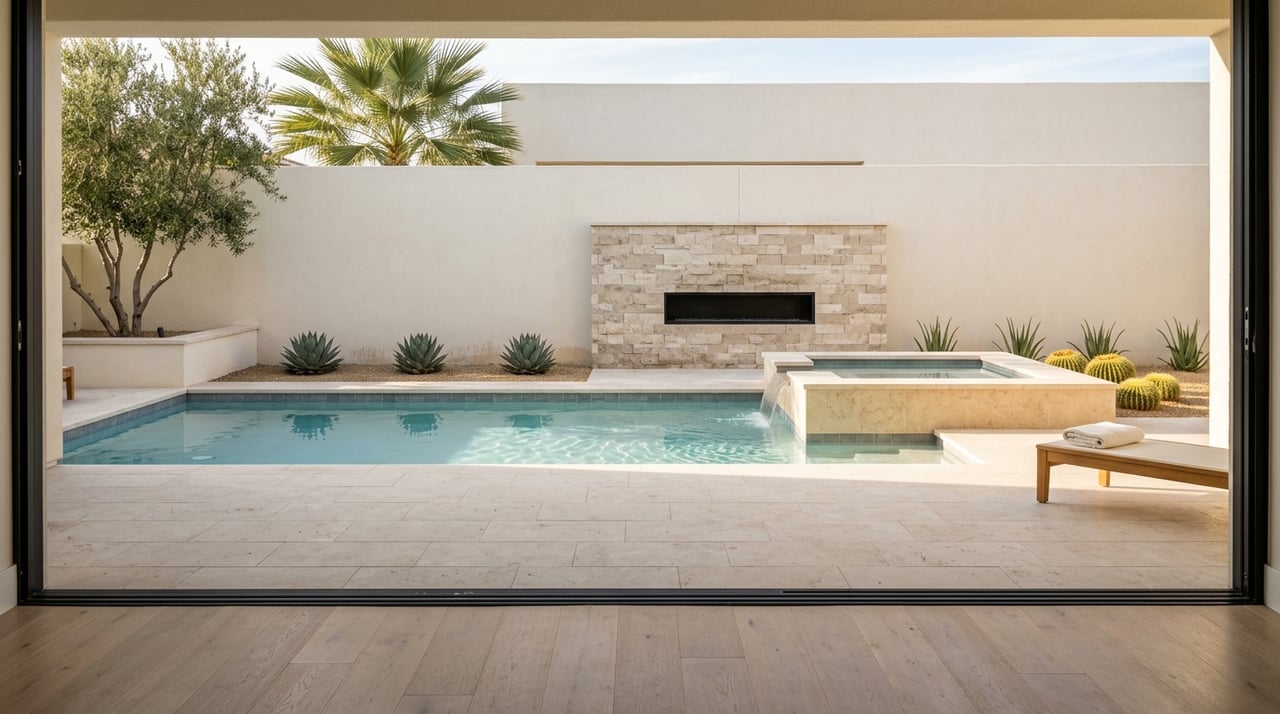
Paradise Valley Living: Resort Style At Home
April 23, 2026
April 23, 2026
Looking for a home that feels like a private retreat every day? In Paradise Valley, that idea is not just a luxury talking point. It is built into the town’s setting, zoning, and lifestyle. If you are curious about what resort-style living really means here, this guide will help you understand the day-to-day experience, the types of homes you can expect, and how Paradise Valley compares with nearby luxury areas. Let’s dive in.
Paradise Valley is a small incorporated town in the Scottsdale-Phoenix corridor with a strong residential identity. According to the town’s Basic Town Facts, it was incorporated on May 24, 1961, includes 15.4 square miles of land area, and has a 2025 population estimate of 12,774.
What stands out most is how intentionally the town is shaped. Paradise Valley reports that it is predominantly zoned for single-family housing and includes 9 resorts, 11 public and private schools, 3 golf courses, and 4 medical centers. That combination gives you a highly residential setting with convenient access to hospitality and everyday services.
The phrase “resort-style living” can mean a lot of things, but in Paradise Valley it has a clear, practical meaning. The town describes itself as a quiet desert oasis framed by Camelback Mountain, the Phoenix Mountain Preserve, and the McDowell Mountains, with an average of 294 sunny days a year.
That natural setting shapes daily life in a big way. You get mountain views, desert landscaping, and a calmer pace than you might find in a more urban luxury market. For many buyers, that creates the feeling of being away from it all while still staying close to Scottsdale and Phoenix.
Paradise Valley also emphasizes privacy and low density in its official language. On its short-term rental information page, the town says it has adopted regulations to protect quiet neighborhoods, reduce neighbor impacts, and preserve the town’s lifestyle. If you value space, discretion, and a more peaceful residential environment, that matters.
One reason Paradise Valley stands apart is the concentration of high-end resort amenities within a small town footprint. The town’s visiting guide lists notable resort and spa destinations such as Camelback Inn, Mountain Shadows, Omni Montelucia, Sanctuary Camelback Mountain, Hermosa Inn, Andaz Scottsdale Resort and Spa, and Kimpton Miralina.
That nearby resort ecosystem influences the residential experience. Even if you are buying a primary home instead of booking a weekend stay, you still have access to well-known dining, spa, and gathering places close by. Paradise Valley’s official materials also point to resort dining options like Prado, Lon’s, elements, El Chorro, Hearth ’61, Lincoln Steakhouse, Rita’s Kitchen, and others.
For many homeowners, that means your routine can include experiences that feel elevated without requiring a long drive. Dinner with mountain views, a spa afternoon, or a meeting at a resort lounge can become part of normal life rather than a special trip.
If you are considering a move to Paradise Valley, it helps to know that the housing stock is shaped by zoning in a way that supports a more spacious feel. The town’s zoning ordinance includes minimum lot sizes ranging from 10,000 square feet in R-10 districts to 43,560 square feet in R-43 districts, which is one acre, and up to 175,000 square feet in R-175.
That helps explain why Paradise Valley often feels more like an estate market than a typical suburban one. Buyers should generally expect custom single-family homes rather than tract housing. The zoning code also allows features often associated with luxury properties, including private garages, guesthouses, residential staff quarters, and private pools.
Some homes, especially hillside properties, may also be subject to added review for factors such as grading, drainage, height, lighting, and materials. That can help preserve views and maintain the visual character that many buyers are seeking.
Paradise Valley’s planning priorities reinforce the town’s long-term vision. In its community conversation summary, the town highlights support for preserving one-acre zoning, limiting height and density to protect views, and encouraging amenities such as dining, spa, retail, and gathering spaces.
For you as a buyer, this matters because it signals consistency. The town’s approach is not centered on rapid densification. Instead, it is focused on maintaining the lower-density character that supports privacy, mountain views, and the overall resort-like atmosphere many people come here for.
Paradise Valley is firmly in the luxury tier of the Phoenix metro. According to Redfin’s Paradise Valley housing market data, the median sale price in March 2026 was $4.8 million.
For context, Redfin reported Scottsdale at $1.0 million and Arcadia in Phoenix at $1.5 million during the same period. Price is not the whole story, but it does show that Paradise Valley sits in a distinctly higher bracket. If you are evaluating long-term ownership here, it is important to understand that you are entering one of the most premium residential markets in the region.
If you are comparing top Phoenix-area locations, Paradise Valley, Scottsdale, and Arcadia each offer a different version of luxury living. The best fit depends on whether you want privacy, city energy, historic character, or a mix of all three.
Scottsdale offers a more city-like experience. The city reports a population of 243,050 across 184.5 square miles, along with more than 90 restaurants, 320 retail shops, 80-plus art galleries in Old Town, and more than 60 miles of trails in the McDowell Sonoran Preserve.
That means Scottsdale gives you more large-scale shopping, dining, arts, and recreation options. Paradise Valley, by contrast, is quieter, more residential, and more intentionally low density. If you want a private home environment with resort access nearby, Paradise Valley may feel more aligned.
Arcadia offers a different type of appeal. It is a Phoenix neighborhood rather than an incorporated town, and the city’s District 6 information places Arcadia within a broader district that also includes Biltmore and North Central.
Official Phoenix sources and neighborhood materials tie Arcadia to older residential character and preservation-minded identity. In practical terms, Arcadia sits between Scottsdale and Paradise Valley in feel. It is more neighborhood-driven and historic in character than Paradise Valley, while Paradise Valley remains the most resort-centered and low-density of the three.
Living in Paradise Valley often means your home does more of the heavy lifting. Larger lots, private outdoor spaces, guest accommodations, and pools can support entertaining, relaxation, and multigenerational flexibility right at home.
The town’s setting also supports a quieter rhythm. With mountain backdrops, desert views, and a strong emphasis on preserving neighborhood calm, everyday life may feel more private and less fast-paced than in denser parts of the Valley.
That can be especially appealing if you are relocating for work, looking for a second home, or searching for a property that supports both lifestyle and long-term ownership goals. Paradise Valley offers a specific kind of luxury, one rooted in space, setting, and consistency.
Paradise Valley is not trying to be everything to everyone. Its appeal is more focused. If you want a lower-density residential environment, estate-style homes, mountain surroundings, and easy access to resort dining and spa experiences, it offers a compelling lifestyle.
It can also be a strong fit if you value discretion and want a home that supports comfort, hosting, and long-term enjoyment. On the other hand, if you prefer a more urban pace with broader retail and entertainment density, Scottsdale may offer more of what you are looking for.
The key is matching the town’s character to your goals. In Paradise Valley, resort-style living is less about flash and more about how your home, your lot, and your surroundings work together to create ease.
If you are exploring Paradise Valley as your next move, working with a local advisor can help you weigh lifestyle fit, property type, and long-term value with more clarity. When you are ready to talk through your options, connect with Camille Kennard for thoughtful guidance tailored to your goals.
Stay up to date on the latest real estate trends.

Whether you're a first-time home buyer, looking to expand your investment portfolio, or just seeking advice on becoming more financially savvy through real estate, I'm here to help. I believe that with the right knowledge and guidance, everyone can achieve their real estate dreams and create a legacy for their loved ones, Contact Camille today!
Camille Kennard
4222 N Marshall Way Scottsdale AZ 85251